Leave Your Message
The global Grinder Machine market is evolving with manufacturing demand, automation, and stricter quality expectations. Market studies from Grand View Research and Fortune Business Insights indicate steady growth across industrial machinery and grinding equipment segments through 2030. Their estimates vary because product definitions differ. Some reports include precision grinders, while others count broader material-removal systems.
That distinction matters to buyers. A compact surface grinder may serve a toolroom, while a CNC cylindrical grinder can support automotive shafts, bearings, or aerospace components. MarketsandMarkets reports continued investment in smart manufacturing, where sensors, machine connectivity, and automated inspection improve process control. However, automation alone does not guarantee accuracy. Skilled setup still matters.
This guide examines leading Grinder Machine manufacturers and suppliers worldwide through practical buying factors. These include spindle speed, positional accuracy, wheel compatibility, cooling systems, safety design, service coverage, and replacement-part availability. ISO 9001 certification can support quality assurance, but it should not replace factory audits or performance testing. Buyers should request tolerance data, application samples, warranty terms, and commissioning support.
Real production details reveal more than glossy brochures. A stable machine should hold repeatable tolerances during long shifts, not only during demonstrations. Supplier rankings can also be imperfect. Regional coverage, shipment records, and after-sales performance are not measured consistently across reports. Therefore, this overview combines published market research with technical criteria and manufacturer evidence. The aim is practical guidance, not a universal winner.
Top Grinder Machine Manufacturers and Suppliers Worldwide
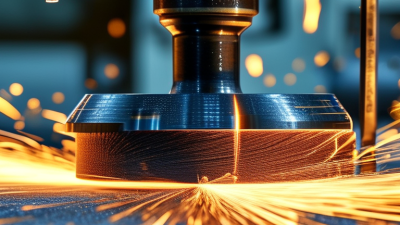
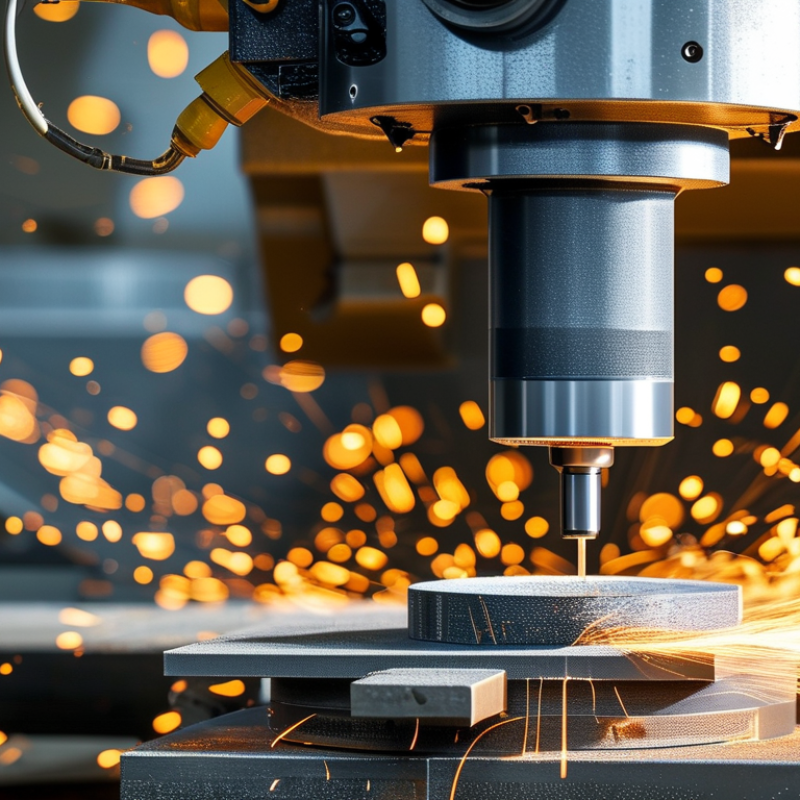
Grinder machines remove material through abrasive cutting, shaping, or finishing. Common types include surface, cylindrical, centerless, tool-and-cutter, and gear grinders. Each design supports a different tolerance, geometry, and production rhythm. Surface grinders create flat faces, while cylindrical grinders refine shafts, bearings, and precision sleeves. Centerless models can process long batches without clamping each workpiece.
Their functions reach far beyond metal removal. In automotive plants, grinders finish crankshafts and transmission components. Aerospace workshops use them for tight-tolerance turbine parts. Medical manufacturers depend on controlled grinding for compact surgical instruments. According to Grand View Research’s 2024 market analysis, the global grinding machine market is expected to grow at roughly 5% annually through the decade. Estimates differ between reports. That matters when comparing suppliers, because market boundaries are not always consistent.
Tips: Check spindle speed, wheel compatibility, coolant control, and achievable tolerance. Ask for verified test pieces, not attractive catalog claims. A machine that holds 2 micrometers in a laboratory may perform differently beside a hot production line. The U.S. Department of Energy identifies machining as an energy-intensive manufacturing activity, so measure power use during real cycles. Automation can improve consistency, but it may also increase maintenance complexity. I have found that operators often underestimate setup time. That small mistake can erase the expected productivity gain. Choose suppliers that provide training, service records, and measurable acceptance criteria.
| Grinder Machine Type | Primary Grinding Mechanism | Typical Feed Materials | Typical Product Size or Finish | Main Function | Common Industrial Applications | Key Advantages | Important Operating Considerations |
|---|---|---|---|---|---|---|---|
| Ball Mill | Impact and attrition between rotating grinding media and the material. | Minerals Ceramics Cement clinker Pigments | Coarse to fine powder; commonly capable of producing material below 100 micrometres with suitable media and operating conditions. | Fine grinding, blending, homogenizing, and mechanical alloying. | Mining, cement, ceramics, construction materials, chemical processing, and laboratory research. | Simple construction, reliable continuous operation, and suitability for wet or dry processing. | High energy consumption, media wear, noise, and possible contamination from the grinding media or liner. |
| Hammer Mill | High-speed impact from rotating hammers against breaker plates or screens. | Grain Biomass Soft minerals Pharmaceutical materials | Typically produces a coarse to medium powder, often from approximately 0.5 to 10 mm depending on screen size. | Size reduction and controlled milling of relatively soft or brittle materials. | Animal feed, food processing, fertilizer, biomass fuel, chemical production, and pharmaceutical manufacturing. | High throughput, compact layout, easy screen replacement, and straightforward maintenance. | Less suitable for very hard or abrasive feed; dust control, heat generation, and screen wear must be managed. |
| Pin Mill | Impact and shearing between intermeshing rows of pins on opposing discs. | Sugar Spices Starch Fine chemicals | Fine powder, commonly ranging from approximately 20 to 150 micrometres depending on material and configuration. | Fine grinding and deagglomeration of dry, free-flowing materials. | Food ingredients, nutraceuticals, pharmaceuticals, pigments, and specialty chemicals. | Compact design, high product uniformity, and relatively easy cleaning in sanitary configurations. | Feed must generally be dry and free-flowing; excessive moisture can cause clogging and reduced capacity. |
| Jet Mill | Particle-on-particle impact generated by high-velocity compressed air or gas. | Pharmaceutical powders Ceramics Minerals Advanced materials | Ultrafine powder, frequently within approximately 1 to 50 micrometres; some systems can produce sub-10-micrometre particles. | Ultrafine grinding with limited mechanical contact and narrow particle-size distribution. | Pharmaceuticals, electronics materials, aerospace materials, pigments, and high-performance chemicals. | Low mechanical contamination, no conventional grinding media, and suitable processing of heat-sensitive materials. | Requires compressed gas, has high operating cost, and is generally unsuitable for sticky or highly fibrous materials. |
| Colloid Mill | Intense shear and friction between a high-speed rotor and a closely fitted stator. | Liquids Suspensions Emulsions Wet solids | Produces fine dispersions and emulsions; particle size depends strongly on viscosity, gap setting, and formulation. | Wet grinding, emulsification, homogenization, and suspension preparation. | Food sauces, dairy products, cosmetics, pharmaceuticals, paints, inks, and chemical formulations. | Combines grinding and mixing in one unit and can process many liquid-solid formulations continuously. | Temperature control may be required; abrasive solids can accelerate rotor and stator wear. |
| Roller Mill | Compression and shear between rotating rolls, often with adjustable roll gaps. | Wheat Corn Coal Mineral feed | Produces controlled coarse, medium, or fine particles depending on roll gap and roll surface. | Crushing, cracking, flaking, and controlled particle-size reduction. | Flour milling, animal feed, grain processing, coal preparation, and mineral processing. | Lower fines generation than some impact mills, adjustable product size, and efficient operation for certain feedstocks. | Roll alignment, differential speed, feed uniformity, and roll-surface condition strongly affect performance. |
| Cylindrical Grinding Machine | Abrasive contact between a rotating grinding wheel and the external or internal surface of a rotating workpiece. | Steel shafts Bearings Hardened components Precision parts | Precision dimensional finishing; surface roughness can reach low micrometre or sub-micrometre ranges with suitable equipment and process control. | External diameter, internal diameter, taper, and shoulder grinding. | Automotive components, bearings, machine tools, hydraulic parts, aerospace components, and general engineering. | High dimensional accuracy, excellent roundness, and superior surface finish on cylindrical parts. | Requires accurate workholding, wheel dressing, coolant management, and control of thermal damage. |
| Surface Grinding Machine | Abrasive wheel or segment grinding across a flat workpiece surface. | Tool steel Machine plates Molds Precision fixtures | Flat surfaces with tight dimensional control and fine surface finish, depending on wheel type and process parameters. | Precision finishing of flat, angular, and stepped surfaces. | Tool and die production, mold manufacturing, engineering workshops, cutting-tool production, and maintenance operations. | Good flatness, repeatability, and control of surface finish. | Workpiece magnetism, wheel dressing, coolant filtration, and heat generation influence final accuracy. |
| Centerless Grinding Machine | The workpiece is supported between a grinding wheel and regulating wheel without conventional centers. | Pins Bushes Rods Small shafts | High-volume cylindrical finishing with close dimensional tolerances and consistent roundness. | Through-feed, in-feed, and plunge grinding of cylindrical components. | Automotive, bearing, medical-device, fastener, hydraulic, and precision-component manufacturing. | High production rates, continuous operation, and reduced workholding time. | Setup is sensitive to regulating-wheel angle, blade height, dressing accuracy, and workpiece geometry. |
| Disc Grinder | Material removal between one or two rotating abrasive discs. | Metal plates Gears Washers Engine components | Controlled thickness reduction and parallel surface finishing, depending on single-disc or double-disc configuration. | High-rate grinding of opposing faces or one flat surface. | Automotive parts, gears, bearings, electrical components, and precision metal fabrication. | Efficient material removal, good parallelism, and suitability for batch production. | Requires accurate wheel dressing, balanced loading, effective coolant flow, and careful control of thermal distortion. |
| Belt Grinder | Abrasive belt running over contact wheels, platens, or pulleys removes material by abrasion. | Steel Aluminum Stainless steel Wood | Ranges from aggressive stock removal to blending and finishing, depending on abrasive grit and belt speed. | Deburring, weld blending, edge finishing, surface preparation, and contour grinding. | Metal fabrication, cookware, cutlery, shipbuilding, woodworking, and maintenance workshops. | Flexible contact, rapid abrasive changes, relatively low initial cost, and suitability for irregular shapes. | Belt selection, tracking, tension, operator technique, and dust extraction affect safety and finish quality. |
| Handheld Angle Grinder | High-speed abrasive disc, flap disc, wire wheel, or specialty attachment rotates at an angle to the workpiece. | Steel Masonry Concrete Stone | Local material removal, cutting, weld dressing, rust removal, and surface preparation rather than controlled micron-scale finishing. | Cutting, grinding, polishing, deburring, and cleaning. | Construction, fabrication, repair work, installation, shipbuilding, and general maintenance. | Portable, versatile, widely applicable, and suitable for field work. | Requires correct disc selection, guarding, personal protective equipment, dust control, and safe handling of kickback risks. |